Coordinate movement
Independent sections support the upper and lower body, allowing clinicians to combine controlled movement across multiple axes.
Spinal rehabilitation technology
NeuroSpineX brings controlled spinal assistance and active rehabilitation together. Explore the working prototype and the early evidence behind it.
01 / Full project introduction
From the low back pain challenge to the working prototype: how the platform moves, the preliminary results and Dr. Ahvazian’s perspective.
Then explore the prototypeDevice walkthrough · 1 min 54 sec
See the working prototype in use, with active leg movement and controlled platform motion.
The movement architecture
Coordinated support.
Control across multiple axes.
02 / The platform
NeuroSpineX brings upper- and lower-body traction, controlled rotation and lateral flexion together with active leg movement. It is being developed for clinicians working with persistent or recurrent low back pain.
Independent sections support the upper and lower body, allowing clinicians to combine controlled movement across multiple axes.
Active leg movements are intended to recruit trunk stabilising muscles while the platform provides mechanical assistance.
Adjustable movement and force settings support a defined rehabilitation workflow, with clinician oversight throughout.
03 / Preliminary evidence
An earlier device version has been used in clinical settings in Iran. The latest project summary provides a starting point for independent, prospective evaluation.
Initial baseline compared with pain recorded before the latest documented session.
Protocol-adherent participants who attended more than three sessions.
Project-reported summary · September 2026These are preliminary observations from a selected, uncontrolled group. Selection effects and concurrent treatment limit attribution. They do not establish comparative efficacy or long-term durability, and are not a prediction of individual outcomes.
Clinical perspective
Hear Dr. Ahvazian discuss his clinical experience with NeuroSpineX.
Physiotherapist
Director of Asaman Center
A clinician's account of early use, shared alongside the project's preliminary evidence.
Explore the evidence04 / Engineering and safety
Force monitoring, bounded movement and operator intervention are central to the engineering programme.
Formal safety verification, usability evaluation and the UK regulatory pathway are next-stage priorities.
Load cells support monitoring and limits on applied forces.
Emergency stop and clinician control are part of the device design.
Mechanical stops, locks and defined movement ranges form the physical safety approach.
Engineering iterations are being directed toward repeatability, usability and maintainable production.
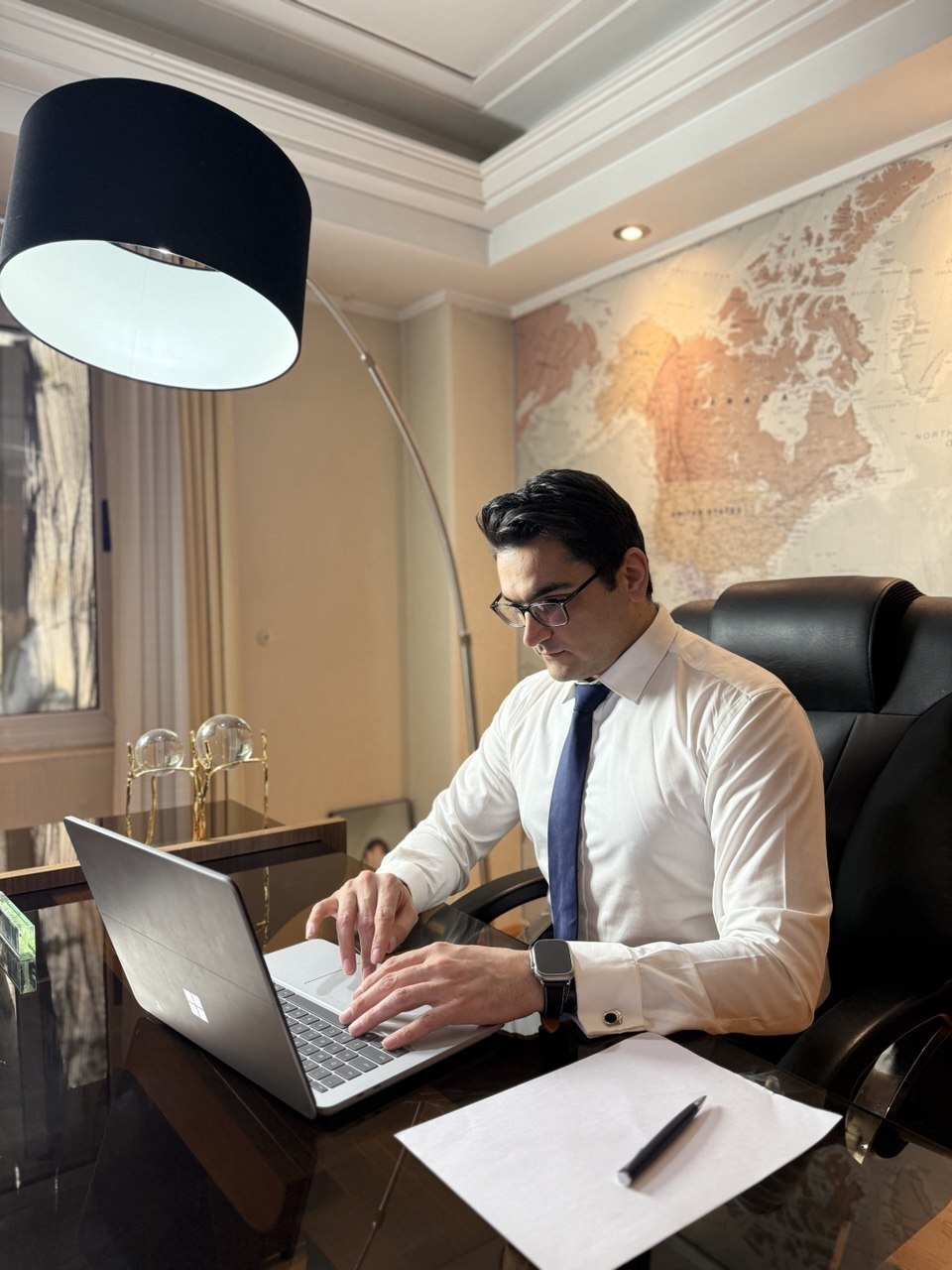
05 / Meet the founder

Mechanical engineer · Inventor · Independent founder
Soroush is a mechanical engineer and medical-device inventor developing NeuroSpineX as an independent project. He began working on the concept around 2022 and has led its mechanical design and successive prototype iterations.
His work focuses on bringing controlled mechanical assistance and active patient participation into one rehabilitation platform. The next chapter is to advance the engineering and build the independent clinical evidence needed to evaluate it.
Built
A working platform and earlier clinical use provide the foundation for the next device version.
Patent pending
All 21 claims received a positive assessment for novelty, inventive step and industrial applicability in the EPO’s international search written opinion of 28 January 2026. This preliminary assessment is based on the examiner’s interpretation of the claims; clarity objections remain.
PCT/IB2025/055653 · Filed 2 June 2025
Next
Safety and usability verification, a defined regulatory route and prospective clinical evidence.
Future development
A planned AI module would explore protocol support using imaging and clinical data, following validation of the core device.
Clinical and commercial collaboration
We are seeking partners to help evaluate, manufacture and bring NeuroSpineX to rehabilitation providers.